



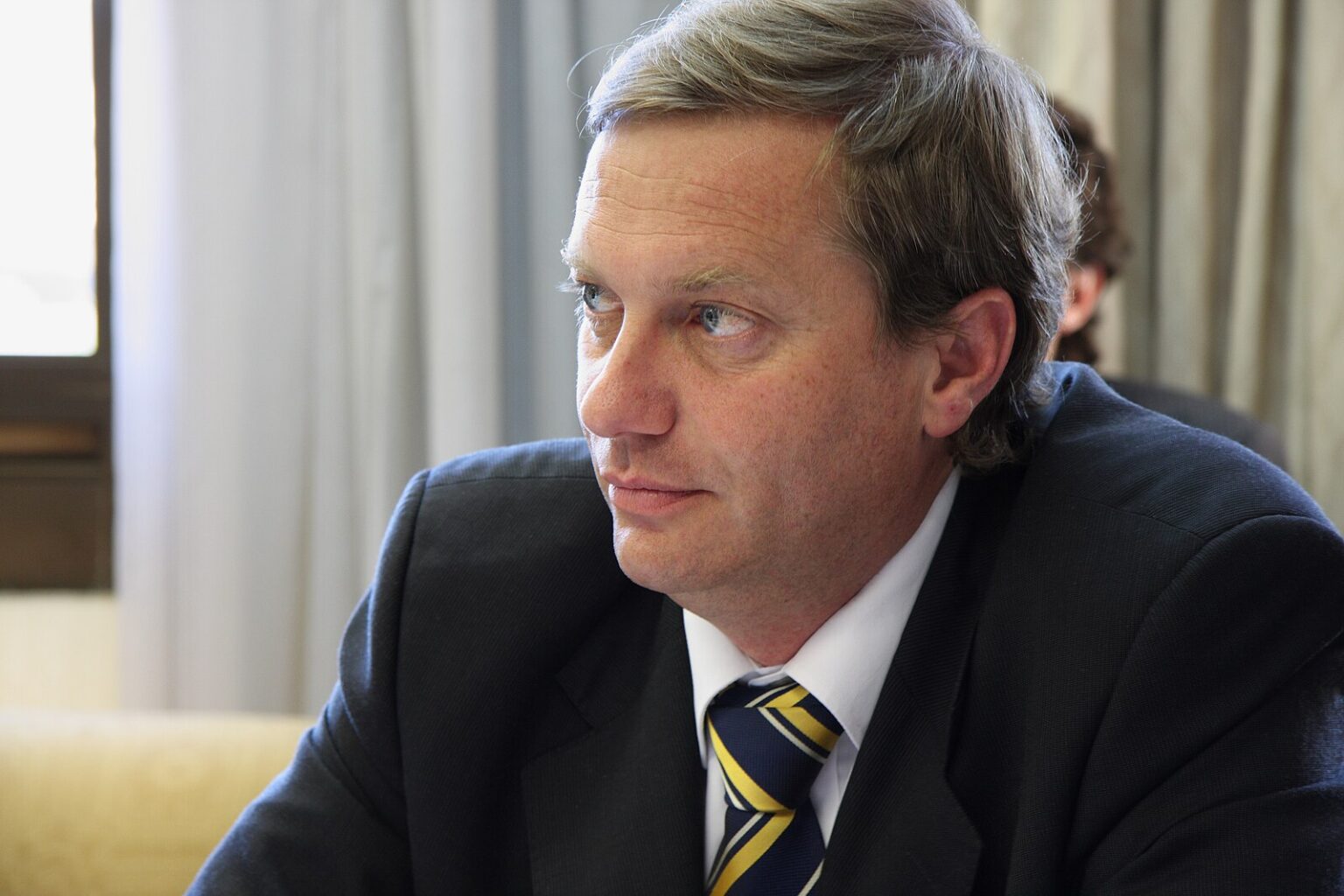

The election of far-right President-Elect José Kast has ignited fears of a return to Chile’s authoritarian past and a hardening of its neoliberal present, yet analysts argue his victory represents less a radical break than the reassertion of a traditional, oligarchic order deeply embedded in the nation’s power structures.
Author: Alejandro Kirk
As expected, a far-right admirer of former dictator Augusto Pinochet has won Chile’s presidency. José Kast is the youngest son of a former German Nazi officer who arrived in Chile in the late 1940s on false documents. He is friends with some of the dictatorship’s most notorious murderers, rapists, and torturers, such as Miguel Krasnoff. Krasnoff himself is the son of a White Cossack killed during the Russian Civil War, a man now serving successive sentences totalling over 1,000 years (and counting) for his countless crimes, and who might soon be pardoned by his friend, the President-elect.
When Pinochet overthrew democratic socialist President Salvador Allende in 1973, Kast’s family of landowners south of Santiago, the capital city, were active participants and facilitators of the massive repression and revenge that took place in the coup’s wake. This included a campaign of kidnappings, torture, and summary executions against peasants who had been the beneficiaries of Allende’s Agrarian Reform.
Kast’s eldest brother, the late Michael — born in Germany — was Pinochet’s Planning Minister and head of the Central Bank.
The President-elect has forged friendly relations with a coterie of questionable political characters: Brazil’s Jair Bolsonaro, Argentina’s Javier Milei, El Salvador’s Nayib Bukele, Italy’s Giorgia Meloni, Spain’s Santiago Abascal, among others.
He strongly supports Donald Trump’s immigration policies. Inspired by Trump, he has promised to expel 350,000 undocumented immigrants within weeks. He is also in favour of a US military invasion of Venezuela, hinting that he would be willing to help in the effort.
Is this the beginning of a new cycle of fascism? Is a clone of Javier Milei taking over in Chile? Should left-wing and union leaders go into hiding? Will Chile join the US in a war against Venezuela? Had Kast lost the election to the center-left’s Jeannette Jara, would Chile have gone on a very different path?

TWO SIDES OF THE SAME COIN
“Kast is as much a fascist as Jara is a communist,” says Julio Cortés, a human-rights lawyer and expert in fascism studies, playing down the prospect of a fascist dictatorship. Both candidates, he says, largely share a common vision of the country’s most pressing problems, diverging only on emphasis, priorities, and methods to face them.
The center-left coalition behind candidate Jeanette Jara made this election look like a choice between democracy and fascism. Kast, they say, will return the country to the dark days of Pinochet and erase all social benefits allegedly gained over 35 years of post-dictatorship liberal democracy.
Likewise, the entire right and former centrists focused on the “danger of communism” represented by Jara, a life-long Communist Party member.
Fear of a fascist restoration — rather than the prospect of a socialist, or even just a slightly more egalitarian society — became the sole target of Jara’s last-ditch, seemingly desperate propaganda efforts. The establishment narratives of security and immigration — widely propagated by mainstream media — seized the debate, with both candidates competing over who would be tougher than the other.
The latest report by Moody’s, a global credit rating firm, is telling. “Whoever wins, the financial situation will remain stable”, it states, as both candidates, although from different angles, had common key objectives such as “fiscal responsibility” or environmental deregulation for mining and other controversial projects.
Jara failed to distance herself from the government she had been part of as Minister of Labour until this past April, while Kast insisted that she was the candidate of continuity, profiting from the perceived catastrophic performance of Gabriel Boric’s administration.
Such performance is neither catastrophic nor a resonating success, as all indicators prove: the country has been growing at a moderate rate, foreign investment has flowed in steadily, unemployment and inflation are under control, undocumented immigration has decreased and the country’s crime rate ranks lowest in the region.
The problem is that Boric became President on a platform of radical transformation of the country’s economic, social, and institutional reality, after 17 years of dictatorship, over 30 years of ruthless “democratic” neoliberalism, and a popular revolt that made the whole system crack in 2019.
To Daniel Matamala, one of Chile’s most prestigious journalists, the left is cornered by its own making: “How can they promise a structural reform of the healthcare system, when this government could have done it, and instead chose to bail out the owners of the ISAPRES [private insurers] with their own affiliates’ money? How can they denounce economic concentration, after signing a fabulous deal with Julio Ponce [Pinochet’s son-in-law and beneficiary of fraudulent privatizations]? How can they raise the flag of equality, if they gave up the fight for a more equitable tax reform? How can they criticize the AFPs [mandatory private pension funds], if the pension reform doesn’t touch them even with the petal of a rose?”
For all of those positive indicators, Chile ranks as the most unequal nation of OECD, the club of middle and high-income countries club. Its problem is not extreme poverty but extreme richness: a growing middle class on the verge of poverty, ridden by debt and kept away from social programs devised for the poor.
Enraged, this middle class was the main source of 2019’s social uprising, and is believed to be the main electoral base of the surprise third in November’s Presidential first round: Franco Parisi, a populist who ran on an anti-systemic platform denouncing elites and promising harsh treatment for immigrants and delinquents.
With 20 percent of the vote and strong parliamentary representation, Parisi looks like the strongest contender for 2030, when new elections are due. His “anti-ideology” and “anti-elite” discourse is, for Cortés (the lawyer), fertile ground for a classic authoritarian fascist-like mass movement, replacing a left unable or unwilling to challenge neoliberal capitalism.
TRADITIONAL AUTHORITARIANISM
Victory in this election belongs not to an emerging extremist anti-systemic ideology, but to a systemic authoritarian trait present in Chile since the first days of independence from Spain in the 19th century, says Rodrigo Karmy, a Chilean-Palestinian philosopher and professor.
In this sense, Karmy adds, unlike Trump or Milei, Kast is not an outsider ostensibly fighting an establishment in implosion, but an insider within the ruling class, whose mission is to consolidate a conservative order: “In the global crisis of financial oligarchies, our own is also experiencing a dissolution of its hegemony…[Kast] is an insider of a system that maintained the authoritarian apparatus as a restraining force against any democratizing power.
“Therefore, today, faced with the constituent potential that opened up a few years ago, the establishment responds with the same old oligarchic authoritarianism that was never revoked and was always lurking like a guardian against the possibility that the echoes of the Popular Unity [Salvador Allende’s coalition] could return,” Karmy says.
Rather than dancing to the right’s tune, focusing on advertising and algorithms to gain votes in the next election, the left’s task must be to rebuild class consciousness — bringing back the hope and promise of self-determination that animated Allende’s movement decades ago.
For the left, the alternative is irrelevance.