
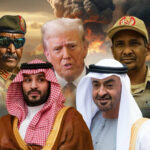


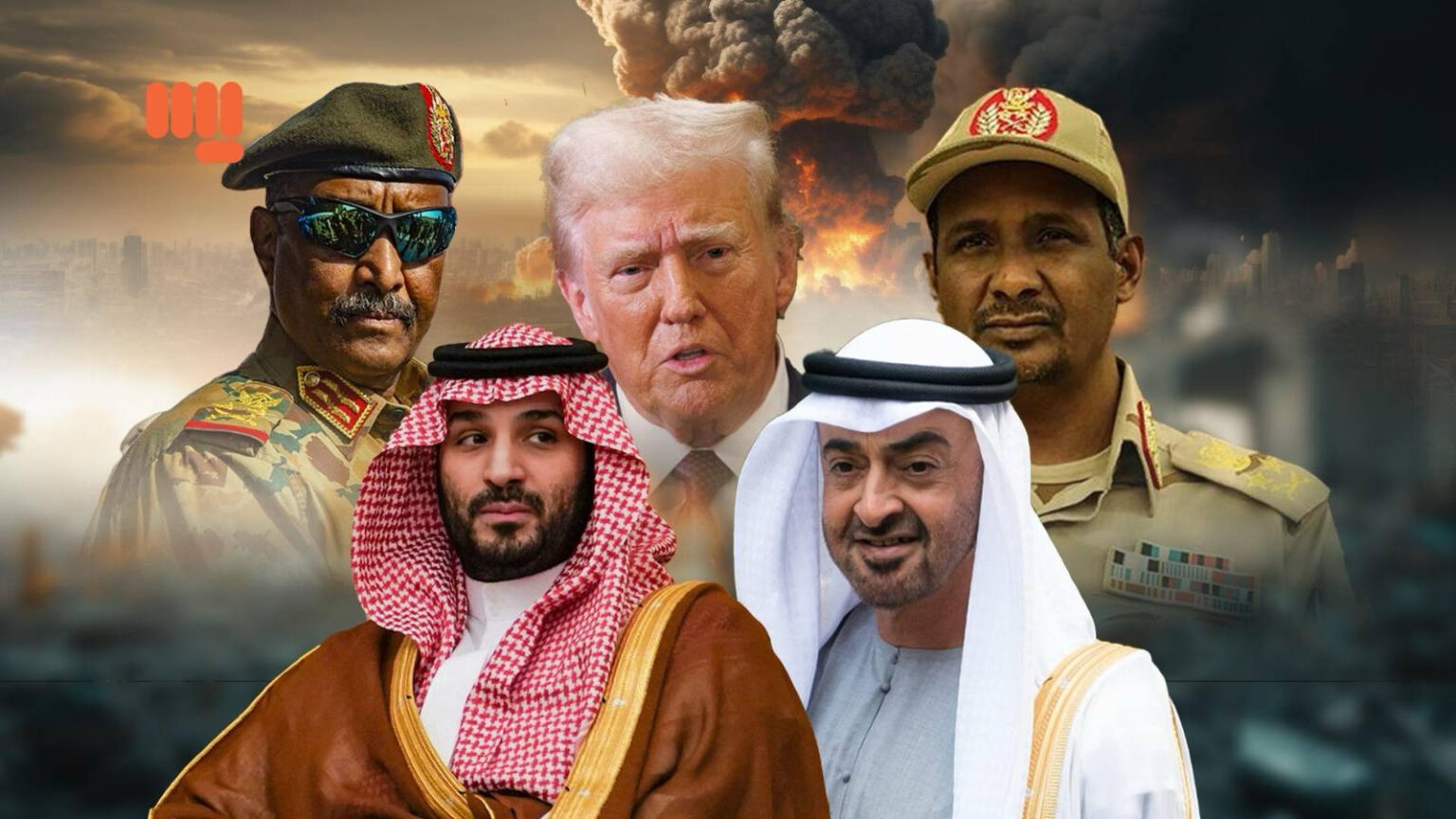

Washington’s economic pressure on Saudi Arabia and UAE is reshaping the competition for Sudanese resources and geopolitical influence along the Red Sea
Competition between Gulf regional powers has intensified under US President Donald Trump. Trump has pressured Gulf states economically while exploiting African nations to revitalize the struggling American economy.
Imperial powers are attempting to salvage their hegemony amid a global crisis facing the entire capitalist system. This crisis stems from economic monopolization, international conflicts like the Ukraine war, and rising competition from China and other powers.
Sudan has become the primary battleground for competition among the Gulf states. The country holds valuable natural resources, a strategic position on the Red Sea, and crucial advantages for international economy and security.
On 18 November in Washington DC, President Trump and Saudi Crown Prince Mohammed bin Salman (MBS) outlined a framework for sharing control over Sudan. This development will likely have significant negative regional consequences.
Trump’s Economic Pressure
“From energy to AI, from healthcare to finance, this forum will showcase how collaboration creates opportunity and drives global progress,” Mohammed bin Salman declared after his summit with Trump.
MBS pledged to increase Saudi investments to $1 trillion. Meanwhile, the UAE signed deals this year boosting Emirati investments to $200 billion.

Trump’s “trade diplomacy” extracts money from multiple sources while controlling regional politics. He secures direct deals with Gulf countries. He pressures these nations over their African interventions. He pursues direct stakes in future investments and reconstruction projects to extract additional resources from Africa.
Both sides benefit from this arrangement. The US needs capital injected into its economy, while the Gulf states need to deploy idle assets held in their sovereign wealth funds.
Both sides also employ the same imperial strategies. They dominate poor countries’ resources, especially in Africa, to compensate for economic losses. These losses include inflation from corporate monopolies and contraction from international banks and stock markets.
The 2008 financial crisis and COVID-19 pandemic brought capitalism to the brink of collapse. Imperial powers responded with various tactics: resource extraction, war, control of trade routes, and confrontation with China. Unable to resist, states like Sudan and Congo have been condemned to endless violence in the service of imperialist interests.
Competition and Tactics
Trump and his envoy Massad Boulos developed a Sudan strategy after securing arrangements in Gaza, Congo, Gabon, and elsewhere.
First, Washington excluded “rogue states” — Iran and Russia — from Sudanese affairs. Second, it limited interventions to regional allies: Saudi Arabia, UAE, Egypt, Qatar, and Turkey. Third, it designated Sudanese resistance against imperial intervention as extremist. For example, it stigmatized regional anti-imperialist forces by labeling them as the Muslim Brotherhood — a tactic similar to those deployed in Gaza, Iran, and elsewhere.
The Trump administration is paving the way for total control. It manages regional competition among allies — competition that ultimately serves American interests — while working to dismantle all opposition to imperialism.
Trump supports Sudanese liberals led by former Prime Minister Abdalla Hamdok. He uses slogans of civilian rule while advocating military exclusion from governance, politics, and economy. This gives rise to a regime that serves US and regional ally interests while excluding competitors like China and Russia.
Washington controls all regional efforts by its allies. The result will be domination of Sudan’s reconstruction, resource extraction — especially gold — and business partnerships that transfer the country’s vast wealth to multinational corporations.
Divided Reactions in Sudan
At the DC meeting, MBS and Trump declared they would end the Sudanese war through intervention. Trump promised immediate action.
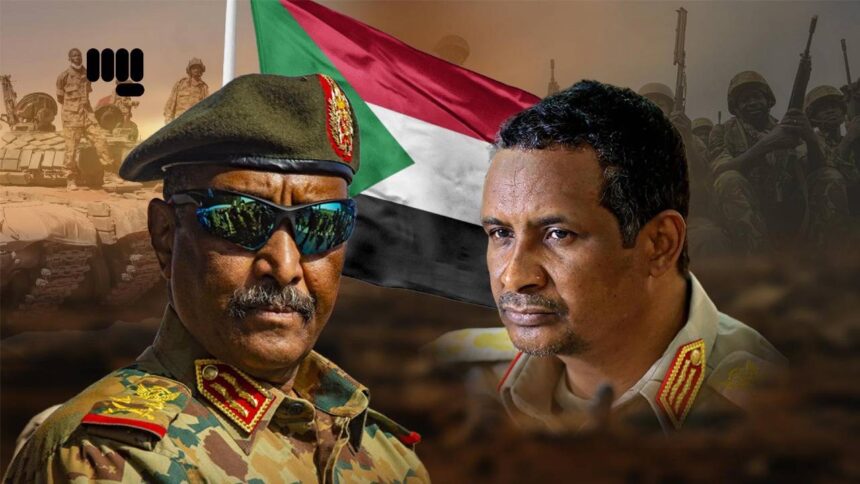
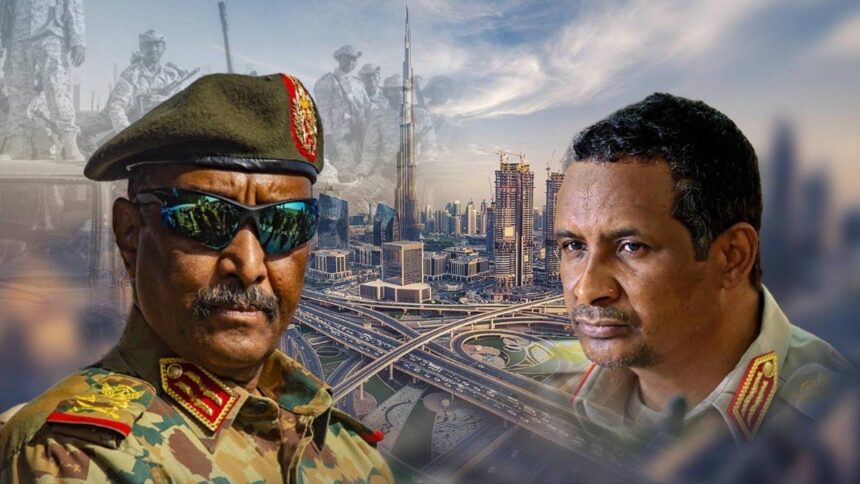
The declaration provoked contrasting reactions among warring parties and Sudanese actors. Sudanese Armed Forces (SAF) leader Abdel Fattah al-Burhan strongly welcomed the initiative. The Rapid Support Forces (RSF) militia ignored the Saudi proposal. The RSF insists peace talks resume under the quad mechanism that includes the UAE — the RSF’s ally.
This development launches a new era of imperialist intervention in Sudan. It opens doors for broader regional competition between Saudi Arabia and UAE under Trump’s economic pressure. Trump extracted $1 trillion from Riyadh and $200 billion from Abu Dhabi.
The arrangement likely includes Saudi Arabia and Sudan joining the Abraham Accords. These developments confirm that imperialist ambitions drive the war. They reveal the opportunistic nature of Sudan’s warring rivals.
Al-Burhan believes Riyadh’s victory over the UAE would benefit him. RSF leader Mohamed Hamdan Dagalo (Hemedti) depends entirely on Abu Dhabi’s influence over Trump.
The reality is clear. Both Saudi Arabia and UAE are regional imperial powers. They are allied with the United States. They align with Israel. They are positioned to join the Abraham Accords. They harbor regional expansionist ambitions toward Sudan, eyeing in particular its lands, water, and livestock — securing a supply of food for themselves while dismantling Sudanese sovereignty and condemning its people to a life of violent deprivation.