


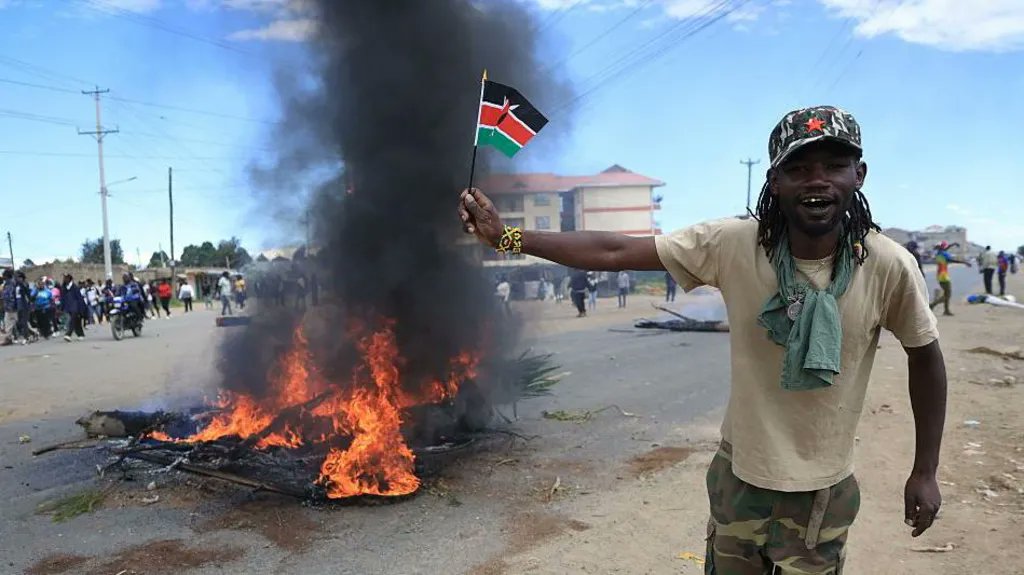

Kenya’s Health Cabinet Secretary stood before parliament and announced that the government will not consult its citizens on a plan to bring Ebola-exposed Americans into the country. “This epidemic does not require any consultation.” The statement landed in a country already reeling from protests over the plan. This article examines how the Ruto administration’s comprador loyalty to Washington is stripping Kenyans of sovereignty and public safety, on the same colonised ground where Britain has operated its largest overseas military base for six decades.
Image: Etop Radio
Author bio: Erick Gavala is a Nairobi-based political and social commentator.
Two Kenyans are dead. They were shot on June 1 in Nanyuki, the same day Kenya marked 63 years since flag independence from Britain. The killings happened after police opened fire on demonstrators protesting against a U.S. plan to build an Ebola quarantine facility on Kenyan soil for Americans exposed to the virus in the Democratic Republic of Congo. Authorities and local health officials declined to confirm any deaths.
The U.S. nationals headed for the proposed 50-bed facility at Laikipia Air Base are considered high-risk exposures, people who may develop symptoms at any moment. Kenya has zero Ebola cases. And yet, the William Ruto administration agreed to take them in, quietly, without public consultation, and, as it has now emerged, without transparency about the terms of the agreement. Now Washington wants them held in the country, and Kenyan lives are already being lost to a deal struck in complicity with their own government.
This is what imperialism looks like in 2026. Kenya claims independence on paper, but on the ground, it is becoming a satellite state where Western powers can station troops, and now fly in Ebola patients, with little resistance from the government, and brutal force for anyone who dares protest.
A Deal Struck in the Dark
The Kenyan public only found out about the deal because the Katiba Institute, a civil society organisation, filed a petition in court to block the construction.
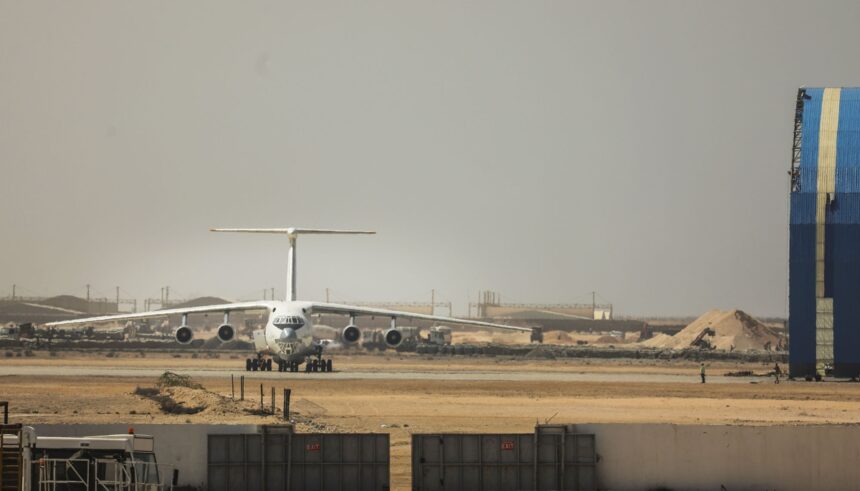
The facility’s originally scheduled opening was May 29. The Kenyan High Court blocked it days before it was due to open, but the U.S. reportedly pressed on anyway. Reuters reported that approximately 20 flights carrying medical equipment and staff landed at the base between May 23 and May 31, many after the court’s suspension order.

On June 2nd, Kenyan High Court judge Patricia Nyaundi issued a second, stronger order, barring the Kenyan government from taking any further steps toward building or operating the facility until the case is resolved. She also ordered the government to disclose the full terms of its agreement with Washington within seven days.
Tellingly, the attorney general did not appear in court to defend the government’s position. “When your government will not even defend its decisions before your own courts, you have your answer about whose government it actually is,” said Katiba Institute Director Norah Matti.
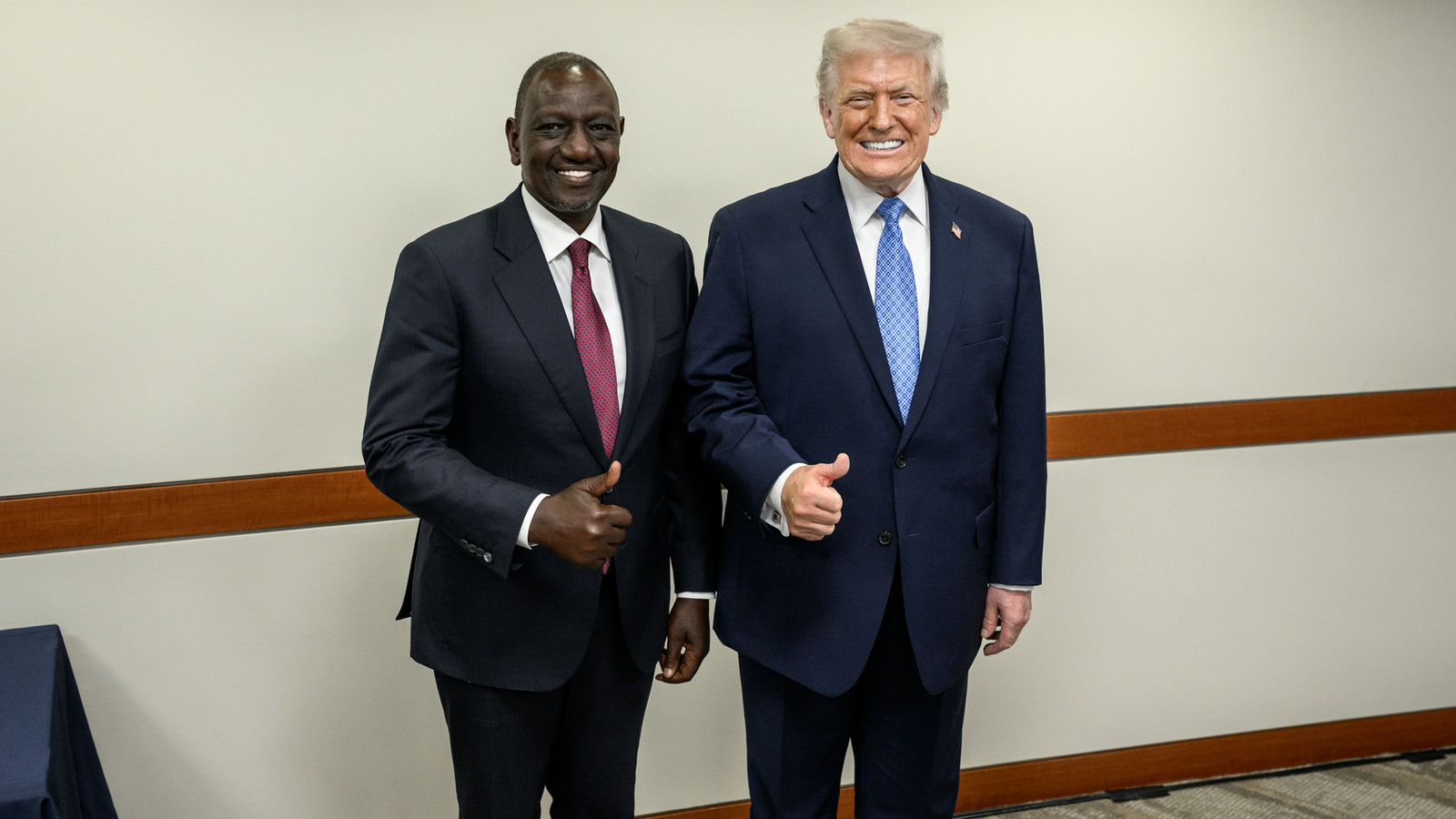
President Donald Trump participates in a trilateral signing ceremony of a peace and economic agreement with President Paul Kagame of the Republic of Rwanda and President Felix Tshisekedi of the Democratic Republic of the Congo, Thursday, December 4, 2025, at the United States Peace Institute in Washington, D.C. (Official White House Photo by Daniel Torok)
The Question the U.S. Cannot Answer
This question has echoed through the streets of Nanyuki, through courtrooms in Nairobi, through most Kenyan conversations recently.
If Ebola is too dangerous for Americans to bring home to America, why is it not too dangerous for Kenya?
U.S. Secretary of State Marco Rubio stated the Trump administration’s position: “Washington cannot and will not allow any cases of Ebola to enter the United States.” It marks a clear departure from U.S. policy during the 2014–2016 outbreak, when infected Americans were flown home for treatment. Now, the plan is to keep them off U.S. soil and send them to Kenya instead.
The Kenya Medical Practitioners and Dentists Union (KMPDU), which represents over 10,000 doctors, responded. Secretary-General Dr. Davji Atellah opposed the government’s secret deal with the US, asking why it agreed to host a foreign facility when Kenya already suffers from chronic underfunding.
The Law Society of Kenya filed a separate petition arguing the deal compromises public safety in exchange for foreign aid, a reference to the $13.5 million Washington pledged to Kenya for Ebola preparedness, confirmed in a formal statement published directly on the US State Department’s website on May 29th, following a call between Rubio and Ruto. The State Department’s own words bear repeating: “The United States’ highest priority remains protecting the health and security of the American people by working to prevent the Ebola outbreak from reaching our shores.”
In return, Kenya becomes the containment region for American citizens the U.S. will not treat at home. Public backlash has been widespread. The logic of that anger is summed up in one line, now circulating widely: “Why do Americans think their lives are more important than the lives of Kenyans?”
One protester in Nanyuki said, “They say this is a quarantine facility for only the Americans. The Americans are selfish to the core.”
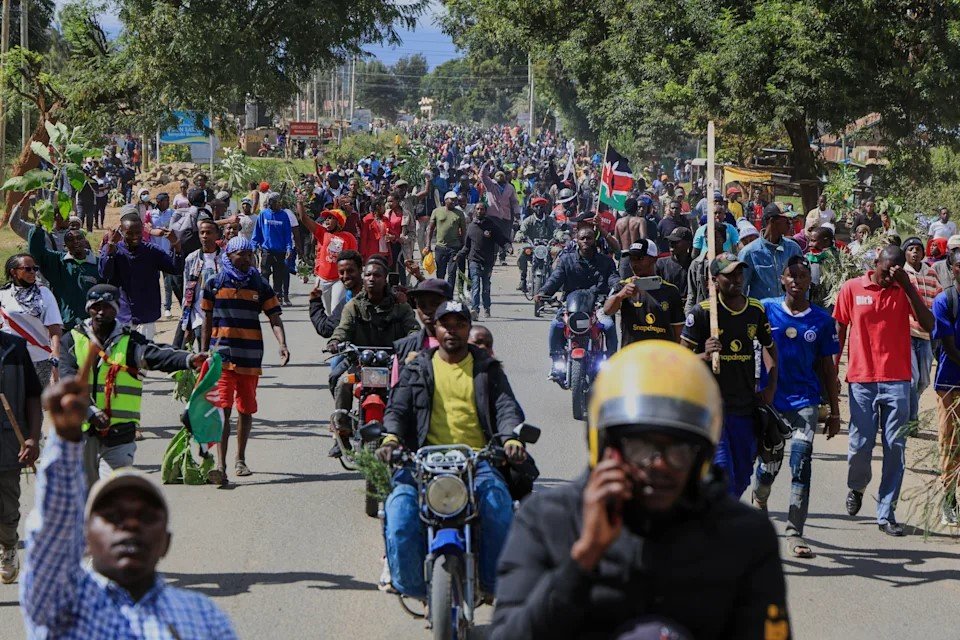
Image: Nairametrics
“We Are Not Going to Consult Citizens”
If there was any remaining ambiguity about what the Ruto administration thinks of its people’s right to a say in decisions that affect their lives, Health Cabinet Secretary Aden Duale erased it on Wednesday, June 3rd, when he appeared before the National Assembly.
“Under the Public Health Act, we don’t need to do public participation. We are not going to consult citizens. This epidemic does not require any consultation,” Duale told parliament.
The people of Laikipia were in the streets protesting precisely because they had been excluded from the decision. Now, that exclusion is official policy.
The CS framed the move as a protective measure. “Tomorrow, God forbid, if Ebola is found in this country,” he told MPs, “this House will call me back here to ask why Kenyans are dying.” He then turned the question back on his critics: “If every county refuses to set up a quarantine facility, where will we treat Kenyans? Are we going to treat them up in the air?”
But his logic collapses under scrutiny. The government’s stated purpose is to protect Kenyans. Its chosen method is to import Ebola-exposed Americans into a country with zero Ebola cases, without telling its citizens, without public health impact assessments, without parliamentary approval, and in defiance of two successive court orders, and now, officially, without consultation. The circular reasoning would be absurd if the stakes were not so high. What is unfolding appears to be governance by decree, a government willing to endanger its people to please a foreign partner, and willing to sacrifice its people to protect that deal.
Laikipia North MP Sarah Korere, whose constituents live in the shadow of the proposed facility, challenged the double standard. “Why is the government treating Kenyan and American lives unequally?” she asked. “Democratic legitimacy comes from engaging the people, not bypassing them.” Laikipia Senator John Kinyua went further, warning against turning the county into “a dumping site for death.” From the opposition benches, former Cabinet Secretary Eugene Wamalwa offered the sharpest moral summary: “Our people are not children of a lesser God. No decision touching on public health should be undertaken without public participation and the full confidence of the citizens.”
That phrase, children of a lesser God, is the operative assumption of this entire arrangement. The United States has decided that American lives must not be risked. The Ruto administration has agreed that Kenyan lives can absorb that risk instead, and the Health CS has now confirmed, on the parliamentary record, that Kenyans will not even be asked.
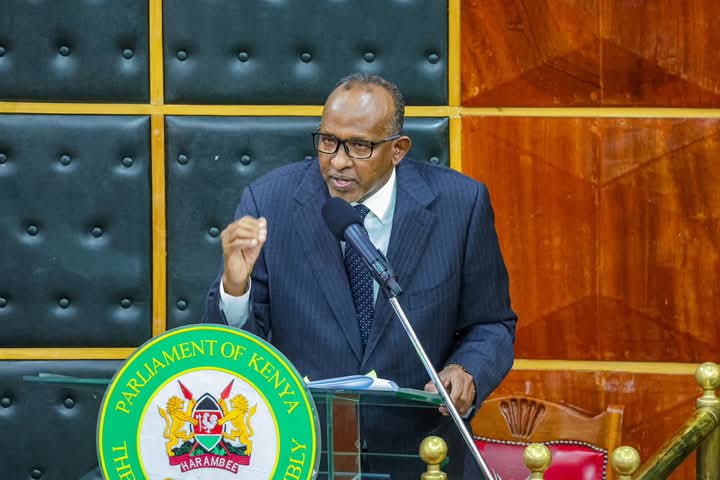
Ruto’s Bet on Washington
President William Ruto broke his silence on June 1, and his justification was as revealing as it was damning. “When President Trump asked the government of Kenya to support them by having a centre in Laikipia Air Base, I gave the okay because it was an agreement and a partnership with friends who have walked with Kenya for 30, 40 years.”
Friends. The kind of friendship in which one party demands and the other complies without condition, regardless of what it costs their own people.
The Kenyan Health Cabinet Secretary attempted damage control by claiming the facility would serve Kenyans and all foreign nationals, not just Americans. However, U.S. officials have not confirmed this. Washington has been explicit about its purpose: protecting American citizens. Ruto’s government is, at this point, making promises on behalf of a foreign power that the foreign power itself has not made.
Then, in a final act of colonial arrogance, the US State Department issued a travel advisory for Kenya, warning American citizens about “civil unrest” and “security threats.” The unrest it is warning about was caused by the very project Washington is building. The security threat it is flagging is the Kenyan people themselves, rising to defend their lives against the importation of Ebola. Read that again slowly: the United States will bring the risk, then warn its citizens about the resistance the danger provokes. Basically, they manufacture a crisis, then issue advisories about the fallout. Ruto’s government has not responded to the travel advisory.
Laikipia Settler Colonialism
To understand why the choice of Laikipia Air Base is not a coincidence, why it is, in fact, the precise and brutal logic of colonial continuity, you need to know what this land is, and what has been done to the people who live on it.
The Maasai were the first to lose Laikipia to the British. In April 1911, Governor Edouard Girouard collected Maasai clan leaders to sign away the Laikipia land to European settlers, despite a treaty signed just seven years earlier that guaranteed the Maasai sovereignty over that land in perpetuity. The treaty had stated explicitly that “European or other settlers shall not be allowed to take up land in settlements.” The British ignored it, coerced new signatures, and took the land anyway. In 1915, the temporary leases afforded to British settlers were extended to 999-year leases.
Today, 48 large-scale ranches occupy 40% of land in Laikipia County. Many of these property owners are descended from the colonists who were originally granted those 999-year leases. Independence in 1963 did not change the ownership of the region’s most fertile acres. The Mau Mau, the Kenya Land and Freedom Army, fought and died for land. Unfortunately, an elite class of Kenyan administrators stepped into the colonial machinery and kept it running.
And there is one more layer. Britain has kept roughly 200 military personnel permanently based in Kenya since the country gained independence from the UK in 1963. Their base is called BATUK, the British Army Training Unit Kenya, and it sits in Nanyuki, in Laikipia County. It is the largest British military base anywhere on earth, five times the size of Salisbury Plain, Britain’s own largest domestic base.
Sexual violence has been a persistent issue. Internal UK military reviews from the early 2000s were accused of burying complaints. A 2025 parliamentary inquiry flagged a deeply troubling pattern of rape and assault, with earlier investigations from 2003 to 2004 reportedly shelving many complaints without ever publishing their findings. Over 650 women and girls have reported sexual violence by BATUK personnel since the 1980s. Most of their cases went nowhere. Hundreds of cases of children fathered by British soldiers and then left behind without financial support or recognition have gone unaddressed.
And then there is Agnes Wanjiru.
In 2012, Agnes Wanjiru, a 21-year-old single mother of a then five-month-old baby, was beaten, stabbed, and thrown into a septic tank at the Lion’s Court Hotel in Nanyuki after a night out with British Army soldiers. A Kenyan magistrate found she was most likely still alive when they put her in the tank.
Her body was found two months later.
On the night Wanjiru was killed, nine British soldiers had checked into the hotel where she was last seen. Weeks after her body was found, Kenyan police asked the UK Ministry of Defence for interviews with the men and DNA samples from them. Interviews were never conducted and samples never sent, with the MoD later claiming it didn’t receive the request. Without either, the Kenyan investigation collapsed.
In November 2025, a former British Army combat medic, Robert James Purkiss, was arrested in the United Kingdom on suspicion of her murder and faces extradition proceedings.
Then came the fires. In 2021, a British training exercise in the Lolldaiga Conservancy sparked a fire that burned more than 10,000 acres. Local residents and workers were displaced, exposed to toxic fumes, and left to handle unexploded ordnance that injured and killed. Kenya’s parliament documented multiple cases of environmental damage caused by BATUK exercises.
And then there are the roads. Local residents have repeatedly accused BATUK of killing civilians in hit-and-run traffic accidents. Victims have been left injured, disabled, or dead. The drivers, military personnel, allegedly fled the scene. Many families say they received no justice or compensation.
In March 2026, the Chief of the General Staff of the British Army visited BATUK in Nanyuki and acknowledged, in public, “there are historical cases where we have let people down, where individuals have been abused or harmed, where lives have been lost, and where the environment has been damaged.” He offered no path to justice; all he did was offer acknowledgement, the coloniser’s favourite substitute for accountability.
This is the place where the Ruto government now wants to host a U.S. Ebola facility. A land that never left the coloniser’s grip, and a community still waiting for justice for Agnes Wanjiru, watching white settlers farm their ancestors’ land.
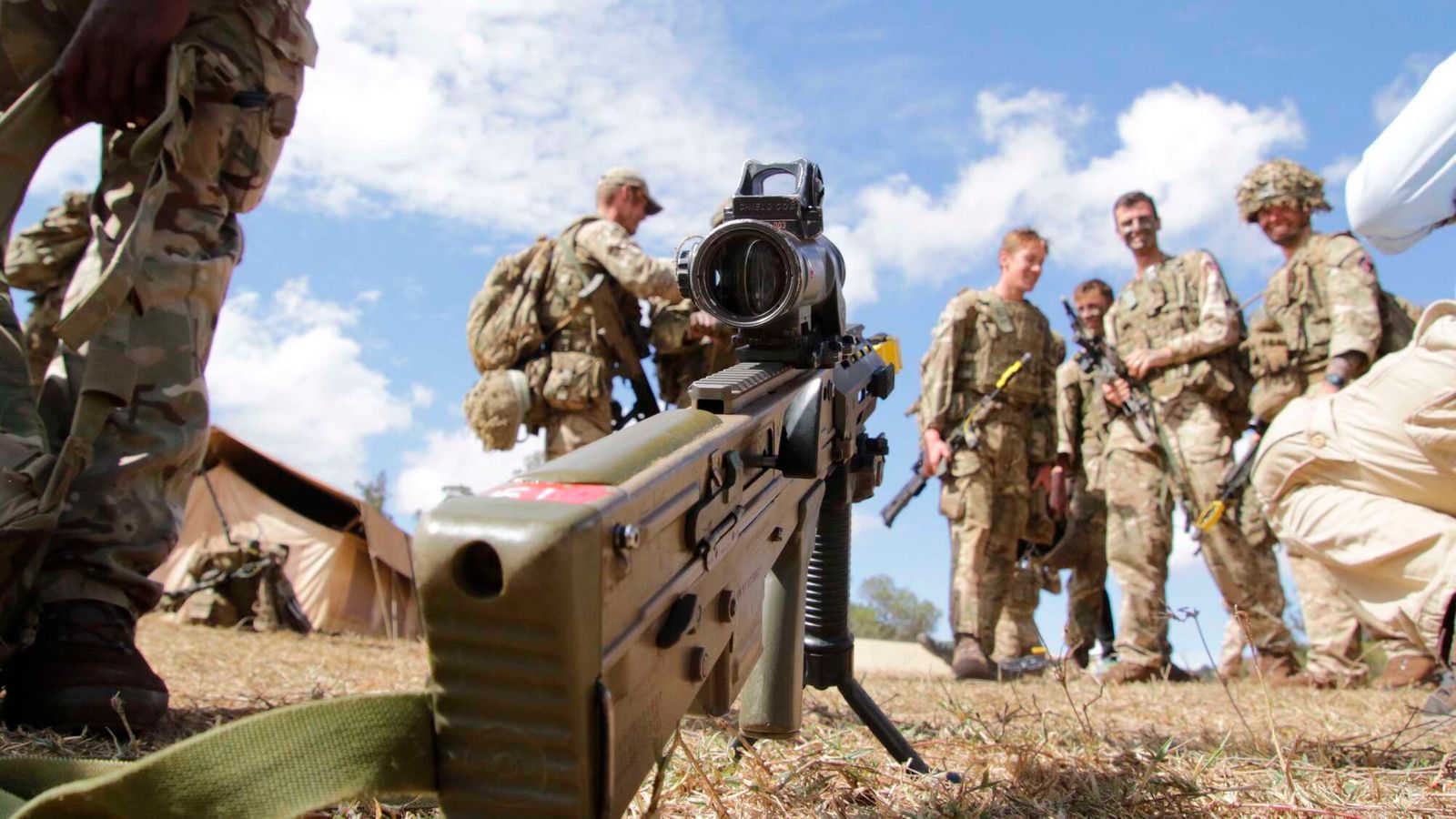
Image: Daily Nation
Kenya’s Pattern of Submission
This is not a one-off.
On December 4, 2025, Ruto signed a $1.6 billion, five-year Health Cooperation Framework with the United States, the first such deal struck under Trump’s overhaul of American foreign aid. It included provisions for the transfer and sharing of Kenyans’ medical and epidemiological data with the US government. Within a week, the Consumer Federation of Kenya filed a constitutional petition against it. On December 11, 2025, seven days after signing, the High Court suspended the agreement, with Justice Bahati Mwamuye issuing an order blocking its implementation. As of now, the case remains before the courts, with the government having attempted, and failed, to get the petition quietly withdrawn through a private consent agreement with one of the petitioners. Justice Patricia Nyaundi, the same judge now presiding over the Ebola facility case, blocked that attempt in April 2026, ruling that constitutional petitions brought in the public interest cannot be terminated by private arrangement. Kenya is not alone in this resistance: according to Lawfare, Ghana and Zimbabwe have separately halted negotiations over comparable health data agreements, citing domestic data sovereignty frameworks.
Each time, the strategy is the same: a deal is negotiated quietly with a Western partner, civil society discovers it and goes to court, the courts rule for the people, and the government stalls, defies, or attempts to bury the case.
The current Ebola outbreak is caused by the rare Bundibugyo strain, which has a mortality rate between 30%–50%. There is no approved vaccine. The outbreak, officially declared on May 15 in the DRC, is believed to be responsible for at least 238 deaths and more than 1,000 suspected infections. Uganda, which shares a border with Kenya, has already recorded confirmed cases. The people of Nanyuki are being proactive. There is a primary school inside the Laikipia Air Base compound. Children attend class there.
The question Norah Matti of the Katiba Institute posed deserves to be heard beyond Kenya’s borders: “How far will the Ruto government go to secure Western support, until it realises it has gone against its very own people?”
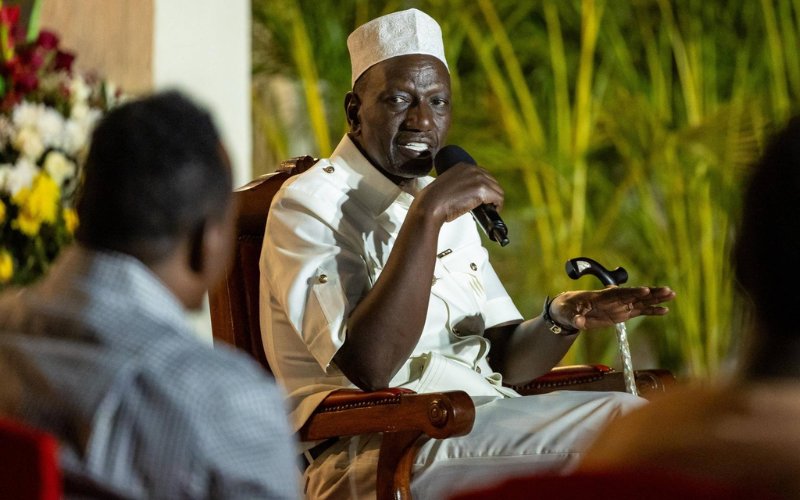
The World Needs to Hear This
The mainstream Western press has given this story a fraction of the attention it deserves. Imagine, for one moment, the inverse: imagine that Kenya had secretly negotiated a deal to send Kenyan patients with a deadly infectious disease to a military base inside the United States. Imagine a U.S. court ordering a halt, and Kenyan military planes continuing to fly into American soil anyway. Imagine American protesters being shot and killed over the deal. The story would not leave the front pages of every newspaper in the world for weeks.
The Mau Mau fought and died on Laikipia soil for the right of Kenyans to determine what happens on their own land. That fight is still ongoing.
Kenya is not an American colony. Kenyan lives are not worth less than American lives. And a government that behaves as though otherwise, that signs secret agreements with foreign powers, defies its own courts, and then deploys police to shoot citizens who dare to protest against it, must be made to answer for it.
The next hearing is June 23rd.
Aluta Continua.